

Tesla’s driver-assistance suite is one of the most talked-about — and most misunderstood — systems on the road. Here’s what each feature actually does, where the camera-only “Tesla Vision” approach fits in, and the limits every driver needs to understand.
By The Manager Channel Updated June 2026 7 min read
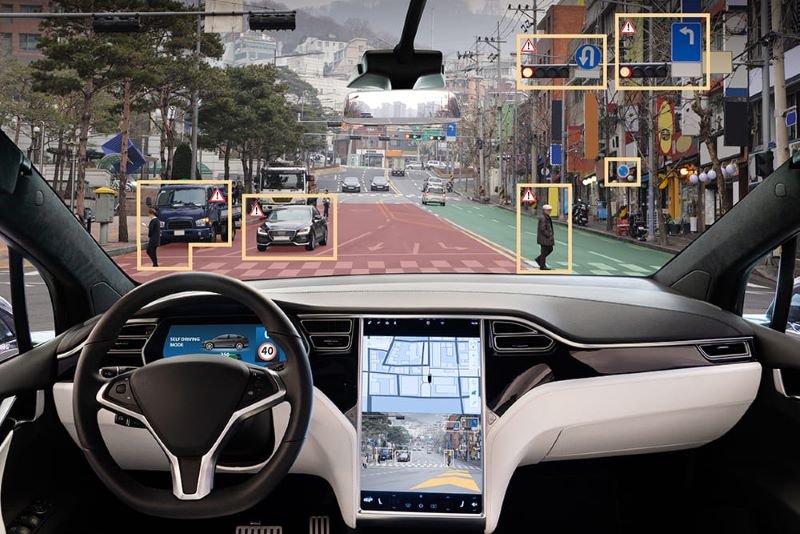
Tesla Autopilot — driver assistance, not autonomyAutopilot comes standard on every new Tesla. Replace with a licensed image before publishing.
Few features in the car world generate as much confusion as Tesla’s Autopilot. The name suggests a car that drives itself — but that is not what it is. Autopilot is an advanced driver-assistance system (ADAS): it shoulders part of the workload, yet it still expects a fully attentive human behind the wheel at all times. Understanding that distinction is the single most important thing about the technology.
The bottom line: Autopilot and Full Self-Driving Capability are designed to assist a driver, not replace one. The features available today do not make a Tesla autonomous. You keep your hands on the wheel and stay responsible for the car.
Autopilot vs Full Self-Driving: what comes standard
Every new Tesla ships with Autopilot included. The optional, paid Full Self-Driving (FSD) Capability package layers additional features on top. Knowing which bucket a feature falls into helps cut through a lot of the marketing noise.
Standard Autopilot
Standard
Traffic-Aware Cruise Control
Automatically adjusts your speed to keep pace with the traffic ahead, rather than holding a fixed cruise speed.
Standard
Autosteer
Works with cruise control to help keep the car centred within a clearly marked lane. It’s built for divided highways with clean markings — not sharp bends or faded lines.
Full Self-Driving Capability
Auto Lane Change
Helps move into an adjacent motorway lane once you confirm with the indicator while Autosteer is active.
Navigate on Autosteer Beta
Guides the car from on-ramp to off-ramp on the motorway, suggesting lane changes and handling interchanges and exits.
Autopark
Handles parallel and perpendicular parking with a single touch, controlling speed, steering and gear changes while you monitor the surroundings.
Summon & Actually Smart Summon
Moves the car in and out of tight spots from the mobile app. Smart Summon navigates more complex car parks to come to you — strictly within your line of sight on private property.
Traffic Light and Stop Sign Control Beta
Recognises lights and stop signs and slows the car to a stop on approach, requiring you to confirm before proceeding.
Tesla also lists Autosteer on city streets as an upcoming capability, and notes that features are rolled out and improved over time through over-the-air software updates.
Tesla Vision: the camera-only approach
Here’s where Tesla diverges from much of the industry. On Model 3 and Model Y built for European and Middle Eastern markets, the company has dropped radar entirely in favour of “Tesla Vision” — a suite of external cameras paired with neural-network processing. Instead of fusing radar and camera data, the onboard computer interprets the camera feeds in milliseconds to build a picture of the car’s surroundings. It’s a deliberately different bet from rivals that lean on radar or lidar, and it’s central to how modern Teslas perceive the road.
How the car keeps you paying attention
Because the human is still the safety net, Tesla builds in active driver monitoring. When Autosteer is engaged, the system measures the steering torque you apply. Too little, and you get escalating visual and audible nudges to put your hands back on the wheel. On cars fitted with a cabin camera (mounted above the rear-view mirror), the system also checks that your eyes are on the road. Tesla states this cabin-camera data is processed on the car itself and is not accessible to anyone, including Tesla.
Ignore the warnings repeatedly and the car locks you out of Autopilot for the rest of that trip. Rack up several of these forced disengagements — three on cars without a cabin camera, five on those with one — and Autosteer is suspended for roughly a week, with no manual override to clear it early.
The active safety features working in the background
Separate from Autopilot’s convenience features, Tesla bundles a set of always-on safety systems on vehicles built after September 2014:
- Automatic Emergency Braking — brakes when it detects an imminent impact.
- Forward and Side Collision Warning — alerts you to potential front and side collisions.
- Obstacle-Aware Acceleration — eases off acceleration if an obstacle is detected at low speed.
- Blind Spot Monitoring — warns of vehicles or objects when you change lanes.
- Lane Departure & Emergency Lane Departure Avoidance — nudges or steers the car back into its lane to avoid a collision.
These assist the driver but cannot cover every scenario — staying alert remains your job.
Where Autopilot struggles
Tesla is candid that plenty of conditions can degrade performance. Heavy rain, snow or fog, blinding sun or oncoming headlights, mud or ice on the sensors, narrow or sharply curving roads, a damaged bumper, and extreme temperatures can all stop the system working as intended. Aftermarket additions matter too: a bike rack, vinyl wrap, stickers or thick coatings over the cameras can interfere with perception. The practical takeaway is to keep cameras and sensors clean and undamaged — and never assume the system sees everything you do.
Calibration note: before first use, the cameras self-calibrate over roughly 32–40 km of driving. If it hasn’t finished after about 160 km, Tesla recommends getting in touch.
The road to full autonomy
Tesla’s stated position is that genuine autonomy will require reliability far beyond a human driver — proven across billions of miles — plus regulatory approval that will arrive at different speeds in different countries. Until then, the honest framing is the one Tesla itself uses every time you engage the system: keep your hands on the wheel, and stay in control. The technology is impressive and improving, but for now it’s a co-pilot, not a chauffeur.
Frequently asked questions
Is Tesla Autopilot fully autonomous?
No. It’s a hands-on driver-assistance system that needs a fully attentive driver ready to take over instantly. It does not make the car drive itself.What’s the difference between Autopilot and Full Self-Driving Capability?
Autopilot is standard and covers Traffic-Aware Cruise Control and Autosteer. FSD Capability is a paid upgrade adding Auto Lane Change, Navigate on Autosteer, Autopark, Summon and Traffic Light and Stop Sign Control.What is Tesla Vision?
It’s Tesla’s camera-based perception system. On Model 3 and Model Y for European and Middle Eastern markets it replaces radar, using cameras and neural-network processing to power Autopilot.Do I still have to watch the road?
Yes — always. Keep your hands on the wheel and stay in control. Repeatedly ignoring the attentiveness warnings locks you out of Autopilot, and repeated lockouts suspend it for about a week.Can older Teslas be retrofitted with the latest hardware?
Cars built between September 2014 and October 2016 use first-generation self-driving hardware and are not eligible for retrofits to the newer hardware.
Source: Tesla official Autopilot and Full Self-Driving Capability support documentation (Tesla Ireland). Feature descriptions summarised and rewritten for reporting purposes. The Manager Channel.
